

Make it in the Emirates: UAE’s largest industrial forum returns with 120,000 visitors and new hubs
Dubai pavilion to highlight export-driven growth strategy
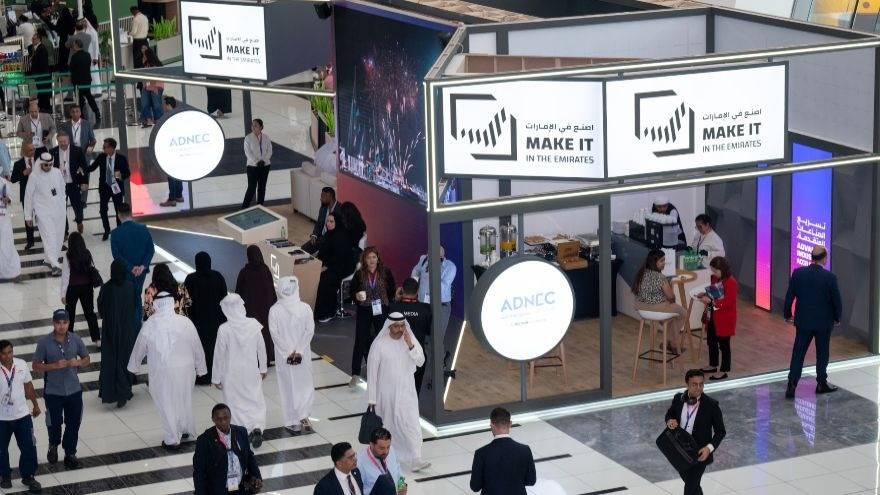
ABU DHABI – The UAE’s flagship industrial platform, Make it in the Emirates 2026, will open on Monday in Abu Dhabi, marking its largest edition to date with an expected 120,000 visitors over four days.
Held at ADNEC Centre Abu Dhabi, the event reflects the country’s accelerating push to strengthen its industrial base through innovation, investment and global partnerships.
Now in its fifth edition, the forum gathers around 1,200 exhibitors across 88,000 square metres, spanning 12 priority sectors including advanced manufacturing, aerospace, pharmaceuticals, energy, mobility and sustainable materials. The scale highlights the UAE’s evolving industrial ecosystem, supported by strong economic indicators, including a 70 percent rise in industrial GDP since 2021 and exports surpassing Dh262 billion.
Make it in the Emirates
Hosted by the Ministry of Industry and Advanced Technology in collaboration with key national entities, the forum serves as a central platform for deal-making and policy alignment. Government bodies, multinational firms, national champions and SMEs are expected to announce major agreements, reinforcing the UAE’s position as a competitive global manufacturing hub.
A key focus this year is resilience in a shifting global economy. Authorities are set to unveil a new generation of the In-Country Value programme, which has already redirected more than Dh473 billion into the domestic economy. The initiative aims to strengthen supply chains, boost local employment and enhance industrial self-sufficiency.
New hubs
A defining feature of the 2026 edition is the introduction of four experiential hubs, representing a significant expansion of the forum’s format. These spaces are designed to move beyond traditional exhibitions and offer hands-on engagement with industrial capabilities.
The Intelligence Hub, spanning 1,400 square metres, is positioned as a central technology showcase. Featuring artificial intelligence, robotics, drones, electric vehicles and industrial cybersecurity, the hub is structured around locally developed innovations, global technologies and collaborative projects. Organisers describe it as a platform for enabling real-time industrial decision-making.
The Industry NextGen Hub focuses on SMEs and start-ups, which account for 61 per cent of exhibitors this year. It provides direct access to procurement pipelines, alongside pitch competitions, investor matchmaking sessions and workshops aimed at integrating smaller businesses into national supply chains.
The Quality Hub offers guidance on certification and compliance, helping UAE manufacturers meet international standards and expand into global markets. Meanwhile, the House of Industry presents an immersive narrative of the UAE’s industrial evolution, tracing its journey from early trade routes to advanced manufacturing through interactive exhibits and visual storytelling.
Dubai presence
Dubai is taking a prominent role at the forum through the participation of the Dubai Department of Economy and Tourism, which is showcasing the emirate’s advanced manufacturing ecosystem at a dedicated pavilion. The presentation aligns with the Dubai Economic Agenda D33, which aims to more than double the manufacturing sector’s contribution by 2033.
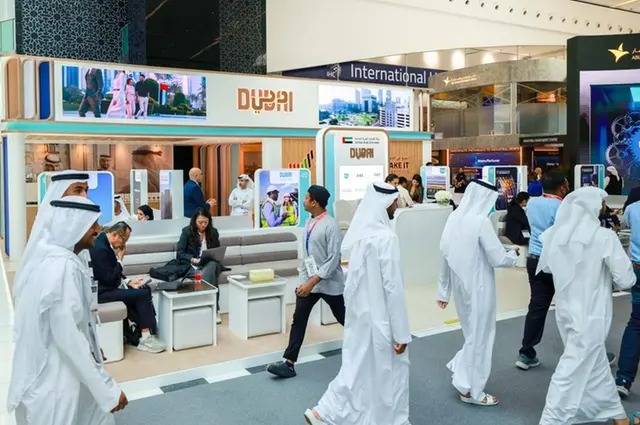
Dubai’s presence comes amid strong economic performance, with GDP reaching Dh937 billion in 2025 and growth recorded at 6.4 per cent in the final quarter of the year. Officials are positioning the emirate as a globally connected industrial hub, supported by world-class infrastructure and access to more than 130 export destinations through trade agreements and streamlined customs processes.
The Dubai Pavilion brings together key entities including Dubai Industrial City, National Industries Park and the Dubai Integrated Economic Zones Authority, alongside innovation-focused platforms such as the Dubai Future Foundation. The collaboration reflects a broader strategy to attract investment, support industrial expansion and strengthen Dubai’s role in global supply chains.
Programmes highlighted at the pavilion include export assistance initiatives, buyer engagement schemes and Industry 4.0 enablement efforts. These are designed to enhance competitiveness, facilitate market access and support manufacturers in scaling operations. Several partnerships with logistics and financial institutions are also expected to be formalised during the event.